






Article: The smell of amber: what place in perfumery ?
The smell of amber: what place in perfumery ?
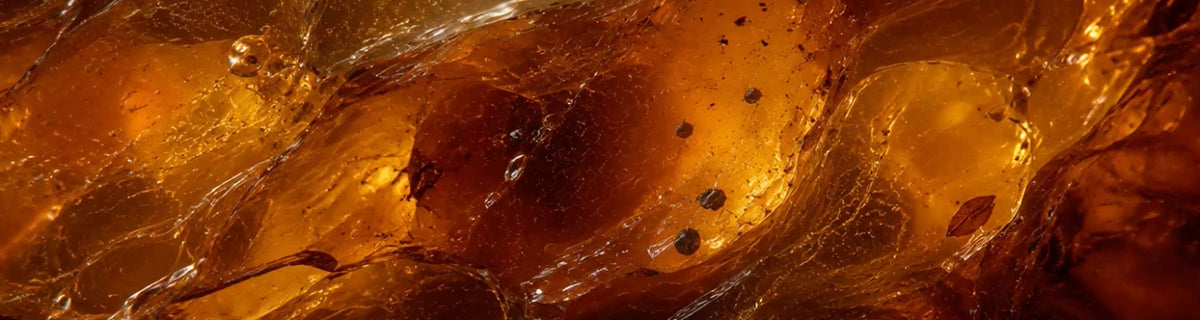
What does amber actually smell like? In perfumery, the term generally evokes a warm, enveloping, resinous, and slightly vanilla sensation. Contrary to what its name might suggest, the amber used in perfume is not the same as the fossilized resin used in jewelry. It primarily refers to an olfactory composition, traditionally built around labdanum, benzoin, and vanilla. Depending on the other ingredients it's combined with, this accord can become more woody, powdery, balsamic, spicy, or sensual.
The amber note is primarily recognized by its impression of warmth and depth. Labdanum lends it a resinous, sometimes slightly leathery facet, while benzoin develops a balsamic and vanilla sweetness. Vanilla rounds out the whole and reinforces its enveloping character. Other materials, such as musks, woods, spices, or tonka bean, can then modify its expression. This is why two amber perfumes can offer very different sensations while belonging to the same olfactory universe.
Amber in perfume should not be confused with ambergris. Historically, ambergris refers to a substance of animal origin with a different olfactory profile, whereas the amber accord is a creation of the perfumer. This distinction explains why the word "amber" can evoke several images at once: golden warmth, resins, vanilla sweetness, but also depth and sensuality.
At the house of
Understanding the scent of amber is therefore less about identifying a single material than about recognizing an olfactory architecture. Warm without necessarily being gourmand, soft yet capable of depth, the amber accord offers the perfumer a particularly rich terrain for playing with light, resins, woods, and sensuality.