





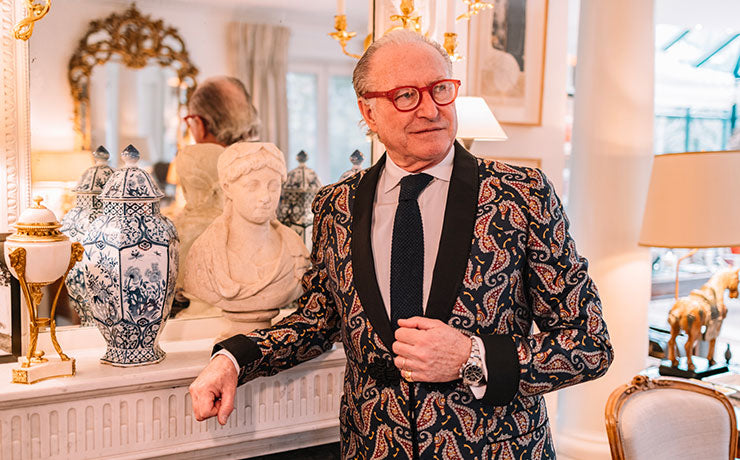
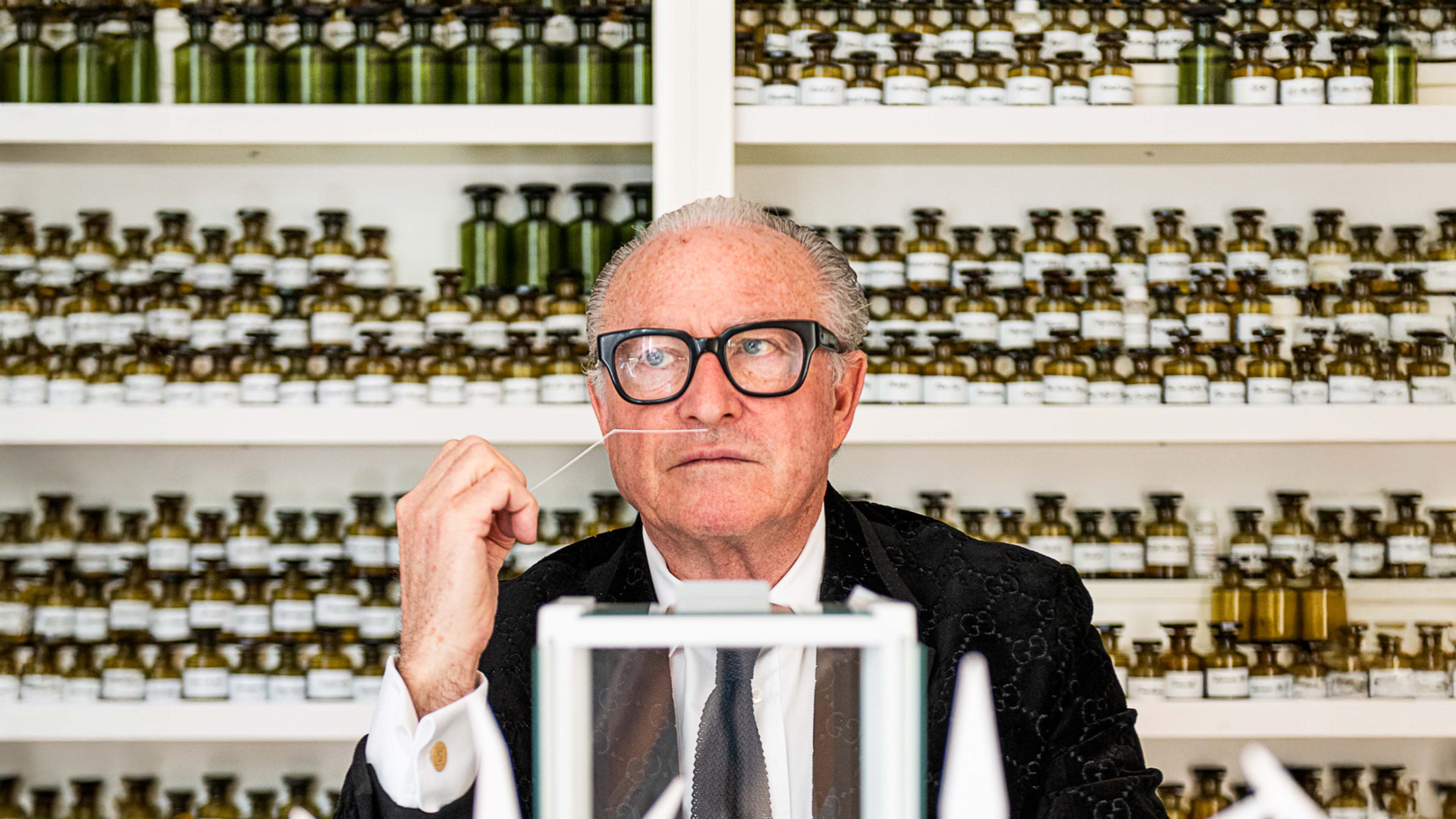
Nose-to-nose with founder Alberto Morillas
Written by Kristina Kyrtabaite-Damule for Plezuromag | Original interview in English
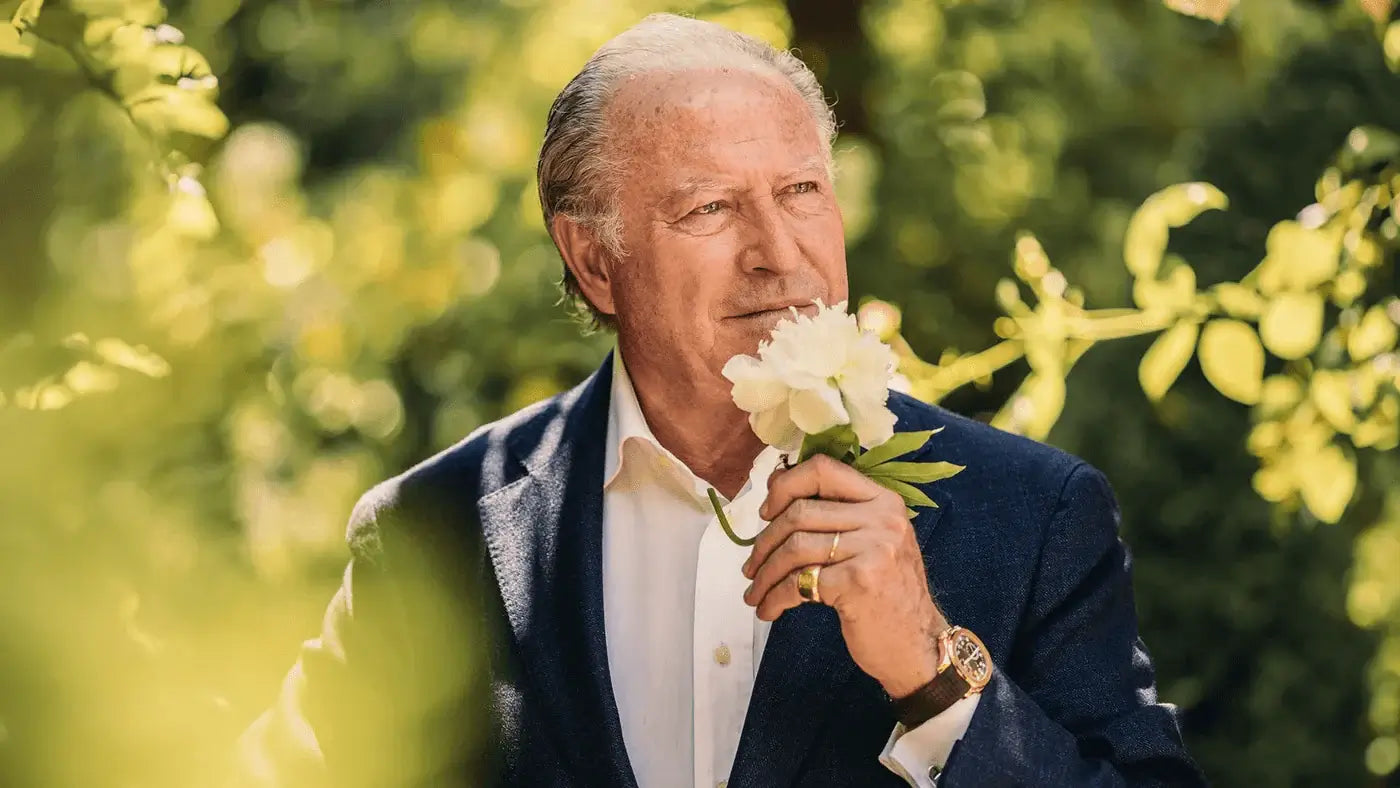
Alberto Morillas shares his creative philosophy, the story of his own house Mizensir, and the emotions that continue to drive his work after more than five decades in perfumery.
Question When did you decide to create Mizensir? What was the initial idea behind the company, and how did the evolution of the scented candles go?
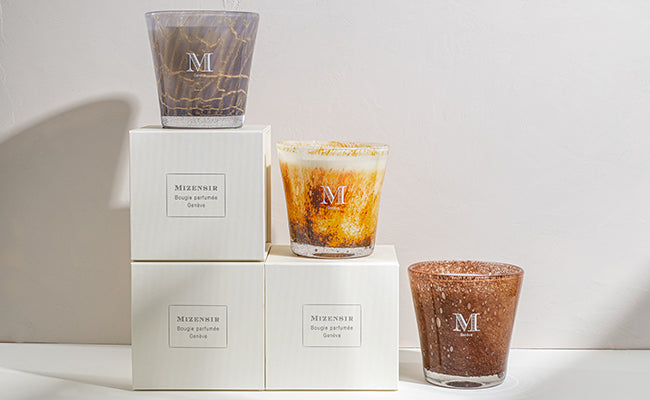
AM I founded Mizensir with the help of my wife Claudine in 1999. It all started when a friend asked me to create a candle that smelled like pine for Christmas: he had just bought a plastic tree that sorely lacked magic in his living room. With this candle Sapin de NoëlThe story began: all my friends ordered some. The evolution towards perfumes happened naturally. As a Master Perfumer, it seemed perfectly logical to launch the Mizensir perfume collection.
Question What does the name “Mizensir” mean and why did you choose it?
AM “Mizensir literally means ‘to put in wax’ in French, which perfectly describes the art of capturing a fragrance in a candle. It was my family and friends who suggested the name: it sounded good with my name, Morillas, and they also noticed that ‘NEZ’ is spelled backwards in MiZENsir… a nice nod to my profession.”
Question Do you still create candles today? If so, do you find it more creatively interesting to create candles or perfumes?
AM Always! Creating is my passion. Recently, I even developed a collection around fruit, which hasn't been released yet. I was inspired by a still life painting I saw at an auction.
Question : Do you notice any echoes of the young, rebellious man who discreetly mixed formulas at Firmenich, in the way you create at Mizensir today?
AM Yes, I don't think I've changed. When it comes to creating, I don't set any limits for myself. I still have the same passion I had 55 years ago when I started in perfumery.
Question : Do your Spanish origins continue to shape your olfactory creation style or influence your creative instinct?
AM Yes, my Spanish roots are très chèreSeville is my very first olfactory memory: the patio, the presence of water, orange blossom, and jasmine were the soundtrack of my childhood. As a child, I wasn't aware of it, but as an adult, it takes on a whole new resonance. Unconsciously, my history has shaped my creative process.
Question You have spent most of your life in Switzerland – a place known for its precision, nature, and understated elegance. How have these values influenced your approach to perfumery and the Mizensir spirit?
AM Switzerland gave me so much when my parents and I arrived in the early 1960s. Just like my childhood in Spain, my youth in Switzerland profoundly shaped my style: the lifestyle, the discipline, the tranquility, the punctuality, and the importance placed on one's word. As fate would have it, we settled in Geneva, home to Firmenich, a large family-owned perfume house.
Mizensir is the result of this journey. It's a Swiss brand where everything is handcrafted in Geneva. An elegant brand, without ostentation or rebellion, simply precise, where the essential element remains the quality of the fragrance: the search for balance and the quest for a sincere emotion, without artifice.
Question Mizensir combines timeless elegance with a modern sensibility. How would you define modernity in perfumery today?
AM It's about embracing what modernity has to offer. At the beginning of my career, I started by learning about natural molecules as a lab technician. I gained some expertise, but I place great importance on using new molecules, such as those derived from biochemistry, in my creations. They are unique and can truly reveal the potential of formulas, enhancing natural ones as well. Modernity means accepting evolution. Working at DSM-Firmenich, I have the opportunity to access the most high-tech and exclusive molecules.
Question Do you ever feel that your first creations are flawed and that you want to change or reinterpret them?
AM Sometimes I forget some of my old creations and then people mention them to me again, or I sense they resonate with someone. I never reuse an old creation, but sometimes I go back to the basic idea and rework it differently.
Question Is there a particular fragrance you have created that captures a deeply personal or intimate meaning for you?
AM I am attached to all my creations. Each one represents a moment in my life, a moment when I dedicated myself to creating. It's like asking a parent which of their children they prefer!
Question : After your long career, is there a raw material or a note that you want to explore and reinvent?
AM You know, all materials still interest and intrigue me. Even those I've known for decades can reveal something new, something unexpected. It's this passion that drives me to explore them relentlessly. Ultimately, this perpetual cycle of creation will never end. As long as you're a perfumer, you remain a passionate explorer, always ready to rediscover and reinvent.
Question Throughout your career, you have created several iconic fragrances, including the revolutionary CK One. What emotions do you feel knowing that your work has changed or shaped the lives of so many people?
AM It's a very special feeling. Above all, I feel deeply grateful. I couldn't have anticipated its success when I created it, and its release was a real phenomenon. Knowing that a fragrance I created has been able to accompany the memories or life moments of so many people is an immense honor. I never sought fame, only to convey a sincere emotion. When someone tells me that a fragrance has marked an era or that it has become personal to them, it's the greatest reward for a perfumer. And it's a fragrance that, incidentally, allowed me to become a Master Perfumer.
Question In your own words, “a perfumer is an artist who interprets emotions.” Which emotion do you think is the most difficult to translate into a perfume, and why?
AM I would say sadness. It's an emotion I find very difficult to translate into perfume, simply because I don't want to work with it. My role is to bring beauty, sincere emotion, but never to weigh down or darken the soul. I prefer to awaken light and joy, even in the most profound creations.
Question What does your creative process look like when you create a new fragrance? Is your approach different when you compose a perfume for Mizensir or for other houses?
AM My creative process always begins with a very clear emotion or image in my mind: a memory, a color, a light, an encounter. I like to start from this vision to imagine the formula. It reminds me of my first meeting with the couturier Alessandro Michele, who spoke to me about the memory of his grandmother's chamomile scent... This conversation with him inspired Mémoire d'une Odeur for Gucci. I always compose by hand, on paper: it's an essential gesture for me, the beginning of everything. For Mizensir, it's even more personal: I have complete freedom, I can fully explore my desires and sensibilities, without constraints. For other brands, I have to interpret their identity, their desires, and find a balance between my vision and theirs. But in all cases, emotion and my passion remain at the heart of it all.
Question The portrait of Jean-Paul Guerlain in Vogue was a turning point in your life. Do you ever think about how your path would have been different if you hadn't come across it?
AM Yes, that's true. That article in Vogue about Jean-Paul Guerlain was a real turning point for me: it made me realize that behind every perfume there's a perfumer, that the profession of perfumer existed, and that it was possible to make a living from it. Nothing was really set in stone for me. School wasn't my thing. The only certainty I had was my desire to do something artistic.
Question Looking back on your career – from your early days at Firmenich to the creation of Mizensir – what do you consider to be your major achievement, either within the house or in your entire career as a perfumer?
AM I don't really like looking back. However, I can tell you that I'm happy to have been able to fulfill myself in a profession that is my passion. I feel honored by the trust that Firmenich placed in me all these years, and I'm proud of the existence of my perfume house, now run by my daughter.
Question From your perspective, how has the perfume industry changed over the decades? Do you think these changes have made it better or worse?
AM The industry has changed a lot, that's undeniable. There has been a great democratization of perfume: today, it is accessible to a wider audience, and above all, there are many more brands and a huge number of product launches each year. There are also more and more new synthetic materials, giving perfumers access to a broader creative palette.
Question How do you envision the future of perfumery, especially in an era where the industry is dominated by fast trends and technological development?
AM Perfumery will continue to evolve with the times. Technology offers incredible tools: new raw materials, more efficient production methods, and more environmentally friendly extraction techniques. The era of rapid trends is primarily a marketing concept. But despite these developments, I remain convinced that the heart of the craft will not change: it is, above all, about emotion and human creativity.
Question What new developments are planned at Mizensir? Can you share any upcoming projects or ideas with our readers?
AM We just launched Ylang Spirit this summer, a floral, sunny, and intense fragrance, a nod to the languor of warm summer days. You know, at Mizensir, we always have a lot of ideas! It's also important to know when to channel them… Anyway, I can't reveal everything, but I can say that we're working on new creations, always with this constant desire to raise the bar for quality and offer something sincere and authentic. Refinement and elegance will remain at the heart of our approach.
Question What advice would you share with young people who dream of becoming perfumers in today's world?
AM In three words: willpower, passion, hard work, and patience. It's a profession that demands time: to understand the materials, find one's own voice, and develop one's sensitivity. It requires a great deal of work, smelling again and again, and never ceasing to learn. But above all, one must remain sincere: not trying to copy or please at all costs, but conveying a genuine emotion. Technique is important, but it's the perfumer's soul that makes the difference.